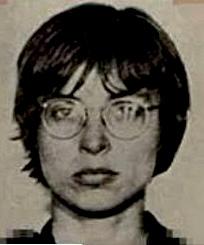
Diana Oughton: The Unstable, Troubled Little Debutante Who Thought She’d Show the World Her Relevance by Becoming a Communist Revolutionary and Marxist Domestic Terrorist

Diana Oughton was a 1960s era Communist revolutionary and domestic terrorist.  Like most Communist revolutionaries from Vladimir Lenin to Fidel Castro, Diana too was from a wealthy family and a member of the upper class. Diana was an emotionally troubled girl who were she allowed her druthers, those of the upper class from which she came, would have been dispossessed of their wealth and likely executed- including her own family.    

Diana’s classmates from the Marxist nursery Bryn Mawr College, seemed to remember her as a “frothy” socially awkward lightweight. The UPI also mentions her being labeled a “scatterbrained” student by her college classmates.   Yes, Diana was mocked by her fellow students as a silly soul who lacked serious depth but, at least her college classmates at the Leftist cadre school possessed the collective decency not to ridicule her to her face. Unfortunately if so,, such polite discretion was likely not exercised by the children young Diana Oughton went to school with during her adolescence in rural Illinois.

At first glance, Diana Oughton seemed an unlikely candidate for being ridiculed or bullied by her classmates in grade school. Diana came from one of the wealthiest families in Illinois. Her family’s holdings during her youth included some 6,000 acres of corn and soybeans, a successful restaurant, and part ownership of the family bank in Dwight. Among the people of rural Dwight, Illinois, the Oughton family was at the top of the social hierarchy. Her classmates came from families whose values were similar to those of herself and her family- devout Christians and conservative Republicans.

Yet her strange psyche which would one day lead her to tear herself away from her close-knit conservative family in pursuit of overthrowing the United States government as a Communist Revolutionary, was likely the very source of her presumed social difficulties in school. Awkward children from wealthy families are often targeted by school bullies out of resentment, envy and norm enforcement. Yet, instead of seeking help and looking inward for whatever had to have been troubling her, young Diana apparently attributed her life’s challenges to things which had little bearing on her situation such as her family wealth, privilege, her Christian faith, conservatism and ultimately our free enterprise (Capitalist) system. Sometime thereafter, she would not only reject these values but later dedicate her life to their destruction. In so doing, she set in motion a series of disastrous events fueled by her own horrific mistakes in judgement which would have tragic results for herself and others.

Despite whatever personal troubles she may have experienced in class and the record is murky at best after some seventy years, Diana finished high school with a strong academic record. She could have attended any college or university open to women at the time. In the end, Diana Oughton insisted on attending the infamous women’s college, Bryn Mawr- a finishing school for aspiring Marxists girls with no shortage of prominent Communist women among its alumnae. Diana graduated from Bryn Mawr College in 1963. It’s difficult to tell how well she did academically as Bryn Mawr doesn’t issue letter grades. What is clear is that she likely left the college as a full-fledged Marxist.

After graduating, Diana linked up with the Leftist, American Friends Service Committee (AFSC) and spent two years “working” with impoverished villagers in Guatemala to build a “sustainable world free of violence, inequality, and oppression.” Typical Communist drivel. Communist have always used these or similar words to conceal their real objectives which have repeated throughout history, involved mass murder and/or imprisonment of political opponents, while also eliminating basic freedoms through a one party totalitarian government. Ms. Oughton and her cohorts were being sent to Guatemala if for anything, to indoctrinate the hapless rural peasantry.

The AFSC had long since replaced the pacifist Quaker theological doctrine of its founding for a collectivist, Marxist worldview which supported violent and genocidal governments and movements over their victims. Later, during the 1970s, the AFSC defended Cambodia’s Khmer Rouge, even after it had become incontrovertibly clear that the Khmer Rouge had murdered more than one million of its own citizens. Diana would later duplicitously explain away her conversion to revolutionary Marxism to her family, by describing the profound inequality and poverty she witnessed in Guatemala. Yet, she was very probably already a bona fide Communist before ever arriving in Guatemala. It’s more likely that she traveled to that third world country not to learn about the poverty experienced by rural tribespeople but instead, to radicalize them with communist revolutionary ideology.

After returning to America in 1965, Diana worked as a “Community Organizer” in Philadelphia. What a surprise! The following year, she enrolled in graduate studies at the University of Michigan in Ann Arbor. There she met the infamous future Weather Underground Organization (WUO) leader, Bill Ayers. The WUO was an overtly Marxist Revolutionary group with the professed objective of creating a revolutionary party to overthrow the United States government. The WGO was formed by Marxist hardliner Ayers and others including Diana Oughton, who wished to break away from the marginally less extreme and deceptively named “Students for a Democratic Society.”

In 1969 WUO members including Diana Oughton, paid a covert visit to America’s primary enemy in the hemisphere, Communist Cuba. In addition to meeting with Castro, they also met with representatives of the North Vietnamese government whom the US was actively fighting in a war, in order to coordinate so-called “global anti-imperialist campaigns.” Good girl! Good girl!

Buoyed after their successful meeting with the Communist representatives from Cuba and North Vietnam, the WUO planned and then initiated its most audacious move of the time, the Days of Rage offensive planned for Chicago to occur from October 8-11, 1969. This revolutionary offensive was intended to be the WUO’s magnum opus. The revolutionary operation was conceived to coincide with the trial of the “Chicago Seven.” The poster advertising the event was emblazoned with a picture of a Viet Cong soldier thrusting his AK-47 rifle triumphantly upward. The slogan on the poster was “Bring the War Home.”
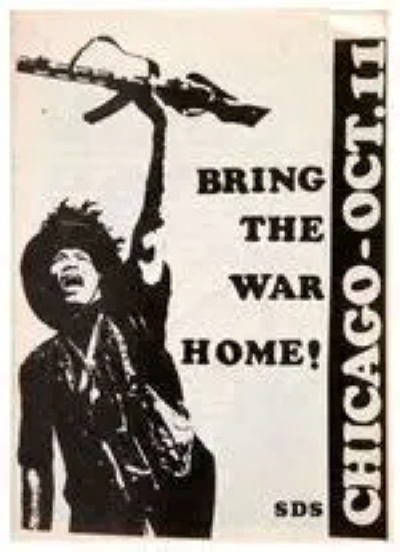
The strategic objectives of the Days of Rage offensive were as follows:

  1. Bring the War Home. This primary objective was to initiate violent civil unrest in their area of operations which the WUO hoped would cause spontaneous civil unrest in other parts of Chicago and elsewhere in the United States. The Days of Rage offense was intended ultimately to spark armed civil warfare throughout the major urban centers within the United States. This was to be the WUO’s equivalent the “February Revolution” protests in Petrograd, Russia, commenced on February 23, 1917, and which caused the Tsar to abdicate while setting the stage for the Bolsheviks to seize power later that year.
  2. Demonstrate Military Tactics. This objective called for the abandonment of peaceful protest in favor of armed military street combat to demonstrate their soldierly fighting capabilities.
  3. Align with Global Revolutionaries. This aim involved working in concert with international Communist governments to disrupt U.S. infrastructure.

The WUO was expecting up to 25,000 hardened protestors to show up ready for armed conflict on the Days of Rage kick-off. Instead, a paltry 200-300 communist insurrectionists who answered the call arrived on October 8, 1969. This demoralizing and insignificant showing spelled doom for the operation and likely knocked the wind out of young Diana Oughton’s sails. Nevertheless, WUO leader Bill Ayers an otherwise brilliant revolutionary tactician, like the commander leading the doomed charge of the Light Brigade, ordered the offensive to proceed.

Rather than using their firearms, the protestors initially utilized pipes, bricks and clubs to smash storefront windows and clash with the police. Yet alas, the police and federal authorities were ready for the revolutionaries, and the cops and federal agents seemed to outnumber the protestors.

In short, the overly ambitious Days of Rage offensive was quickly contained and ultimately crushed by the authorities. Days of Rage became the WUO’s operational failure equivalent of the Battle of Little Big Horn. Well over 200 protesters were arrested, which comprised the vast majority of the revolutionary participants in the ill-fated venture. In addition to Diana Oughton, other prominent leaders within the WUO were also arrested including Kathy Boudin- another Bryn Mawr Communist girl, Cathy Wilkerson and Ayers’ lieutenant, Bernardine Dohrn. Diana Oughton’s arrest occurred on October 9, 1969, and she was able to post bail only after being processed in the Cook County jail where a full set of her fingerprints or “prints” were taken. This routine booking procedure would play a role in her final chapter with the WUO.

Not long after the disastrous Days of Rage offensive, the WUO decided to go underground and become a small-scale paramilitary operation carrying out armed urban guerrilla warfare against the “imperialist United States government.” The WUO split into several underground cells throughout the country. These cells usually comprised three to five men and women living together in a house. Diana Oughton shared an upscale townhouse in the Greenich Village section of Manhattan, with WUO cell members Kathy Boudin, Terry Robbins, Cathy Wilkerson and Ted Gold. The residence was owned by Cathy Wilkerson’s wealthy father. Oh, those snotty rich kids!

This cell of WUO Marxist revolutionaries had turned the cushy bourgeois Greenich Village townhouse into what police later described as a “bomb factory.” The cell began to work around the clock making bombs laced with nails and other shrapnel to cause the maximum amount of damage to their intended targets. They had scheduled a daring attack on a Fort Dix ball for Army Noncommissioned Officers and their families scheduled for the evening of March 6, 1970. The WUO cell members were intent on murdering as many of these U.S. Army Sergeants and their families as possible. The bomb making operation continued through the evening of March 5, 1970, and into the early morning of March 6, 1970- the date of the planned attack to occur that evening.

The WUO member tasked with making the antipersonnel bombs that morning was none other than Diana Oughton, the upper-class debutant from a prominent Illinois family. The problem was that neither Ms. Oughton nor the other WUO cell members in the house had any type of experience in making bombs. As Diana nervously assembled these lethal bombs, placing timers and blasting caps on bundles of TNT, a likely accidental trigger occurred during the handling and assembly of these volatile explosives which caused a detonation.

The explosion, the largest in New York City’s history at that time, destroyed the four-story townhouse and severely damaged neighboring buildings, including the homes of actor Dustin Hoffman and theater critic Mel Gussow. Diana Oughton, Ted Gold, and Terry Robbins were killed instantly. It took days of digging through the debris to find the various pieces of their remains which were unrecognizable. However, investigators found the intact severed finger of a young woman. They took the fingerprint and sent the print to the Chicago Police department for a possible match with any of the WUO members arrested during the October 1969 Days of Rage protest. The fingerprint matched the sample taken from Diana Oughton when she was booked into the Cook County Jail.   
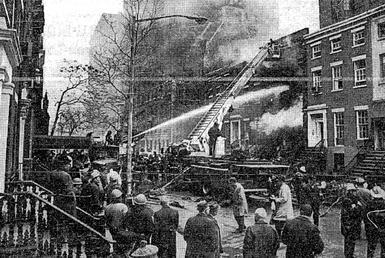
What little there was of Diana Oughton’s remains were sent back to her family in Dwight, Illinois. At the March 18, 1970, funeral, the local high school principal, speaking of Diana Oughton’s father’s feelings, said, “Jim (Oughton) always felt as if she already died once. She was off in a far place, and he just didn’t know why.”

“I think it was an idealism gone astray—she wanted to make a better world, as she knew it,” said an uncle who also said he knew her “quite well, except for the last five years— she sort of dropped out of our world.”

Ms. Oughton was a wholly misguided young soul who made dreadful life choices and who was likely plagued by serious psychological problems. However, her death of many years ago, is a tragedy which none of us should take delight in. Still, this sad event likely spared the lives of the Ft. Dix Sergeants and many of their family members. Further, the horrific and fatal townhouse explosion caused what little remaining support there was for the WUO to evaporate and ultimately, led to the terrorist organization’s demise. These are good things.

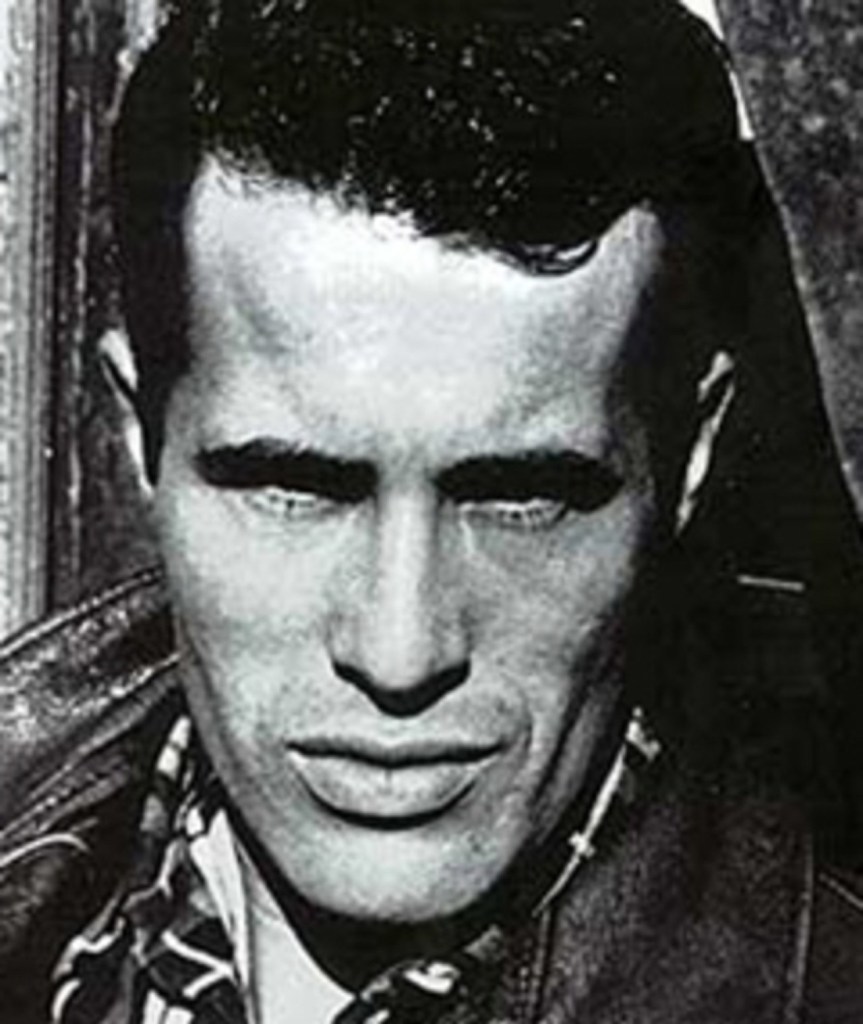
Ed Buck: Major Democratic Party Donor and Depraved Sexual Predator

Ed Buck was a wealthy self-proclaimed LGBTQ advocate and major donor to Democrat Party candidates and causes. Unbeknownst to those members of the powerful and influential circles with whom he regularly mingled, Buck was a dangerous and degenerate sexual deviant who preyed upon the most vulnerable in our society.

Born Edward Bernard Peter Buckmelter on August 24, 1954, to an affluent family in Steubenville, Ohio, young Eddie enjoyed a pleasant if not sheltered childhood. There seemed to be no indicators during Eddie’s childhood that might have led others to predict that one day he would become a criminal sexual predator. Shortly after his 16th Birthday in 1970, Eddie boldly announced to his stunned, conservative parents, “…I am a homosexual.”

This came at a time when the American Psychiatric Association (APA) still maintained that homosexuality was a “mental disorder.” Further, within American society of that era, gay people were viewed unfavorably by the vast majority of the public. It was a daring proclamation for a teenaged boy to make at that time. After finishing high school, Eddie moved to Arizona where he attended and graduated from Phoenix College.  A few years later, he purchased his friend’s courier service business out of bankruptcy with the assistance of his wealthy parents. He made a major success of the operation and sold the concern at an enormous profit. By this time, Eddie had changed his last name to “Buck.”

In November of 1986, Eddie became incensed when the populist conversative Republican, Evan Mecham was elected Governor of Arizona. In response to “those stupid voters” who chose Mecham, Eddie organized a committee to recall the Governor Elect. This action raised young Eddie’s profile on the political stage for the first time. Eddie was collecting signatures for the recall effort even before Mecham’s inauguration. The liberal Phoenix media fawned over Eddie, the “young gay man,” who was working to recall Evan Mecham. Eddie became a cause célèbres to Arizona liberals.

Yet not all of the media attention was favorable to Eddie. There were still some old-fashioned reporters who believed in doing their research. These types of journalists wanted to know a little more about Eddie and his background. They were unwilling to settle for a superficial interview to get a memorable soundbite or juicy quote.

Hence, when Eddie thrust himself into the eye of the media storm surrounding Evan Mecham, he naively failed to consider that certain embarrassing details about his own past conduct might be made public. Thus Eddie, who had become accustomed to adulation and puff from the press, was shocked one morning when he opened his newspaper to find stories about his recent legal problems.

Eddie it appeared, had been arrested for “public sexual indecency” in 1983. Yes, Eddie enjoyed having sex with men in public places. In a separate incident, he was indicted for “attempting to obtain a narcotic through fraud or deceit” when he tried to pass a fake prescription for Percocet. Eddie was also a prolific drug user. It soon became obvious to Arizonians that this guy was not all he or his media admirers claimed he was. While his crimes were not as serious as those which would later send him to prison, it was evident to most that Eddie was a person with serious character flaws. A couple of years later, Eddie would pull up his proverbial tent pegs and seek a more politically suitable climate. Sometime in 1988, Eddie quietly relocated to West Hollywood, California.

When West Hollywood or “WeHo” as the locals call it, was incorporated as a city in 1984. It was then known as the first “majority-gay municipality in the United States. It was no accident that Eddie decided to move there. The culture and political environment was far more favorable to him than that of Arizona in the 1980s. Eddie, who was already financially well off took on the persona of a LGBTQ advocate and made fast friends among the affluent WeHo gay community. Eddie also wasted no time in ingratiating himself to the California Democratic party and Democratic elected officials through his generous donations.

Eddie settled into a fashionable apartment on WeHo’s North Laurel Avenue. It was a quiet little place. Yet, Eddie didn’t exhibit the same bubbly social personality to his new neighbors, that he was known for when mixing with gay community leaders and Democratic Party officials. It was as if he did not want his new neighbors to know too much about him.  

Eddie’s new neighbors in his apartment building eventually took notice of the heavy foot traffic moving in and out of his apartment late at night and during the wee hours of the morning. Some of these neighbors became concerned with the type of people coming and going out of Eddie’s place at those strange times. Many of Eddie’s “guests” looked a little, “rough around the edges,” according to one neighbor. The consensus among Eddie’s fellow building residents appeared to be that these frightening looking men posed a potential threat to their safety.

Although Ed Buck was well known by the WeHo elites and Democratic Party power brokers, the neighbors in his Laurel avenue apartment building knew little if anything about him. When a couple of Eddie’s neighbors mustered the pluck to ask him directly about the alarming late-night visits from his unkempt plebeian friends, Eddie offered an unflinchingly calm explanation with an apology.

“I’m so sorry. I’m a social worker,” Eddie lied then continued along in the following vein, “These are men in real need of my help as they’re struggling with an assortment of serious issues. They’re all really good men and quite harmless.”

A bold-faced lie, yes. However, Eddie undoubtedly found his use of deceit preferable to telling the truth, which might have sounded something like this, “Gee, I’m really sorry folks. The various drug dealers I use prefer to make their deliveries late at night.  Also, I insist that the numerous vulnerable men of color whom I sexually exploit after getting them hooked on methamphetamine and other dangerous drugs, also show up in the wee hours after the illegal narcotics have arrived. Logistically speaking, it just works out so much better that way!”

As implausible as it may seem, Eddie’s neighbors bought the line about his being a “social worker.”  Initially, there were no outward signs of Buck’s debauched character which would have given his neighbors cause for concern.  After all, Buck seemed urbane, gentlemanly, and erudite. He dressed conservatively and was immaculately groomed- at least in public.

In his new fashionable WeHo life, he was a noted LGBTQ activist and a deep pocketed donor to liberal candidates and causes. Eddie had arrived. There would be no more puerile frauds to score drugs with a forged prescription or uncouth forays into cottaging (anonymous gay sex in public places). Eddie had learned from his youthful morasses with the police in Arizona.

 Yet behind the closed doors and drawn curtains of apartment number 4 at 1234 North Laurel Avenue, Eddie had created his own erotic pleasure-dome. The swanky pad was attractively furnished and supplied with several plush abutted mattresses on the living room floor for late night fun.  A large chest adorned a corner of the living room- Eddie’s little box of fun. Its contents included various sex toys, syringes, pipes, lighters, and plastic zip lock bags containing copious amounts different illicit drugs. The later provided by Eddie’s dealers who would discretely and courteously deliver his dope with the decorum of a luxury hotel concierge.

Eddie would spend hours online, perusing the various gay hook-up sites in search suitable sex partners. Eddie was finicky and would not compromise when picking his late-night guests. He had standards, don’t you know?

Eddie’s ideal playfellow had to be a fit and well-endowed black man who was experiencing problems in life which made him vulnerable. These vulnerable down-on their-luck men were usually homeless, unemployed, or going through other challenges. Eddie wanted men that he could exploit.

Eddie was known to offer certain inducements to otherwise reluctant sexual recruits. These included promises of drugs and at times, even cash and other gifts. Eddie was an old man after all and not particularly pleasing to eye. There was no reason for fit, attractive young men to share his company absent some kind of inducement.  In this, Eddie crossed the line into illegality.

Soon, Eddie’s late-night sexual partners started arriving at his doorstep- one after the other. Punctually so, the same way his drug dealers did. At some point, more than one of Eddie’s partners became hooked on the types of drugs he was supplying and at times, injecting them with. Once his sexual partners became hooked, Buck must have soon realized that these men would do just about anything to get their next fix. This is where Eddie overstepped into outright exploitation, if not enslavement. It would be this perverse and licentious urge to sexually exploit others with the aid of drugs, which would later cause his downfall. Eddie enslaved his victims using the same techniques employed by human traffickers.

Enter 26-year-old Gemmel Moore, a gay black man with the looks and physique of a male model. In school, girls swooned over Gemmel. He was an accomplished ballroom dancer with a ready smile and a mentor to his four younger siblings. Before meeting Ed Buck, he was an occasional, recreational user of soft drugs. All of that changed after he met Eddie Buck.

At first, Eddie showered young Gemmel with money and gifts. He functioned as a faux mentor to the young attractive man who was naïve to the ways of society’s dark underbelly. He had never used methamphetamine before meeting Ed Buck. Not long after Eddie had gotten Gemmel addicted to Meth, Gemmel made the following entry in his diary:

“I have become addicted to drugs and the worst one at that…Ed Buck is the one to thank. He gave me my first injection.”

Once Gemmel was addicted, the relationship changed drastically. No longer was Eddie treating Gemmel in the fatherly, caring way as he had before. Now, Eddie the predatory master, gave only commands to his new slave. Gemmal, the handsome young man, with an infectious and engaging personality was transformed into a mere sex toy for Eddie’s depraved sexual perversions.

On July 27, 2017, Ed Buck injected Gemmel Moore with what would become a fatal overdose of methamphetamine. Abruptly, the friendly, radiant, kind young man, Gemmel Moore passed into the hereafter.  Eddie called 9-1-1 but by the time law enforcement and the paramedics arrived, there was nothing that they could do for Gemmel aside from for placing his fresh corpse into a body bag.

The police gave Eddie’s apartment a cursory look through. They found drug paraphernalia and drug residue. It had to have been apparent to them that Eddie Buck himself was as high as a kite. Yet they took no action. No telephonic warrant requested to search the premises. No push for the significant details of what occurred. No arrest of Buck. Just another dead junkie, the police must have thought. The police officers summarily ruled that the tragic death of Gemmel was nothing more than an “accidental overdose.”  In the media news cycle, Gemmel was reduced to a caricature as he was frequently referred to as a “young black drug addict.”

After a couple of days of media coverage, the story surrounding the heartbreaking death Gemmel Moore, faded into the obscurity. Sorry folks, the show’s over. Nothing more to see here. The media and citizens of the greater Los Angeles area had seemed to have forgotten all about Gemmel Moore, the “young black drug addict.” That all changed shortly thereafter, when Gemmel’s family uncovered his diary.

Gemmel’s diary laid out in vivid detail, how Eddie got him addicted to Meth and enslaved him. Upon discovering the troubling entries in Gemmel’s diary concerning the nature of his relationship with Eddie, his family began seeking the assistance of community leaders and elected officials for an investigation into the matter.. The authorities however, considered the issue closed and apart from a modicum of superficial lip service from them, nothing further was done.

About 18 months later, Eddie was exploiting another man. His name was Timothy Dean. Dean also a gay black man, was described by his numerous friends, family and colleagues as a “kind, generous, and well-liked person.” He had a naturally warm personality and was active in his community. He was passionate about “social causes.”

Timothy Dean was seen visiting Eddie’s WeHo apartment numerous times. On January 7, 2019, Eddie injected Dean with a large amount of Methamphetamine which cased Dean to die. For the second time in the past 18 months, the dead body of a gay black man was carted out of Eddie’s little house of horrors by the coroner. Again, the authorities failed to obtain a search warrant after arriving or for that matter or even charge Eddie with possession of illegal narcotics. Timothy Dean’s death like that of Gemmel Moore, was ruled an “accidental methamphetamine overdose.” Really?

The sad death of Timothy Dean caused no shortage of rage within the gay and black communities where he was known by many. The anger expressed by community leaders was quite understandable. Two vulnerable, gay black men died under suspicious circumstances in Eddie’s apartment over a relatively short period of time, yet the authorities seemed to have no interest in pursuing the matter.  A well-organized campaign involving over a thousand people, was formed to seek justice for the two vulnerable men who died in Eddie’s living room. The cause received extensive media coverage.

So, a campaign for justice concerning the deaths of two down-on-their-luck, gay black men was formed and received widespread media coverage. The community was outraged over the matter. Naturally, the police immediately reopened their investigations into the deaths of the two men, obtained search warrants, and questioned Eddie Buck. Right?

Except, they did not. In fact, the police steadfastly maintained that the matter was closed. This made no sense to advocates for justice. Eddie, a wealthy white man, was an influential large donor to the Democratic Party, Democratic candidates and to progressive causes. West Hollywood, like all of Los Angels County, is a place run exclusively by liberal Democrats. This caused many to wonder if Eddie was being protected by those powerful Democratic politicians he donated so generously to.

The campaign for justice went on for over eight months with little to no action from the police. It seemed as though Eddie had a license to continue exploiting people. He undoubtedly must have thought as much because on September 4, 2019, he injected another man with an overdose of methamphetamine.

This third overdose victim was one Dane Brown.  Brown was a 26-year-old gay black man whom Eddie met online. Eddie must have been quite smitten over young Dane Brown as in addition to offering him money, he invited the young man to take up residence with him in his upscale apartment. Shortly after Dane moved into the apartment, Eddie started regularly injecting him with Methamphetamine and would give him GHB, a date rape drug- both are highly addictive.

Gee whiz, Eddie wasn’t trying to get his youthful new roommate addicted to these dangerous drugs so he could enslave and exploit him, was he? Nah. For his part, Dane wasn’t apparently much for reading newspapers or watching television newscasts. Had he done so, he might have realized what a perilous predicament he was in, given his decision to shack-up with Eddie.

In the wee hours of September 4, 2019, Eddie injected Dane with multiple doses on Methamphetamine. A blood test later revealed that Brown had five times the amount of Methamphetamine in his system as either of two other men who had died previously in Buck’s apartment had in theirs. Was Eddie growing tired of Dane and thus, simply decided to kill him with an intentional overdose?  We’ll never know and it would have been almost impossible to prove such an intent absent a confession from Eddie. What we do know is that after the third injection, Dane Brown stated he felt “nearly immobilized,” and believed that he was dying. It was reported that when he then asked Eddie to call the 9-1-1 to summon the paramedics, Eddie Buck cruelly refused to do so.

With every fiber of strength remaining in his body, Dane lurched out of the WeHo apartment and while trembling, sweating, and with a racing heart, stumbled away until he found a nearby payphone. He called the paramedics and the police. He was rushed to the hospital, and many consider it a miracle that he survived.

Dane Brown’s escape from the very clutches of death was the final nail in the proverbial coffin of Eddie Buck. This time there was a survivor. An eyewitness. One who could explain Eddie’s modus operandi. Eddie was arrested not long thereafter.

Interestingly enough, Eddie Buck was charged and tried in Federal Court. Several men were called as witnesses who had experienced Eddie’s creepy, evil hospitality. Yet the star witness was the young Dane Brown. It was Brown’s forthright and steady testimony which torpedoed the best efforts of the Eddie’s high-priced criminal defense lawyers. Brown’s harrowing ordeal as described in his own testimony, helped seal convictions against Eddie as follows:  1. Two counts of distribution of methamphetamine resulting in death. 2. Distribution of Methamphetamine. 3. Maintaining a drug-involved premises. 4. Enticing men to travel interstate for prostitution. 5. Providing drugs for compensation. 6. Using interstate Commerce to entice individuals to engage in prostitution.

Today, Eddie is living in Arizona again, where he first began his business career and political advocacy over 40 years ago. Eddie’s old stomping grounds in Phoenix have changed quite a bit since he last domiciled there in the 1980s. Yet, Eddie hardly notices the changes. In fact, Eddie never really gets around to seeing much of the city these days. That’s because Eddie’s new home is a drab, tiny prison cell in the United States Federal Correctional Institution (FCI) Phoenix. These days, Eddie is referred to as “Prisoner 44535-112” in the US penitentiary system.

Buck has a tentative release date of 2051. He would be around 97 years-old then. Hence, Eddie is essentially serving a life sentence. So, happy days, right? Justice served! Hip, hip hooray! Well, not really.

This story has a terribly tragic ending. Dane Brown, the young man whose testimony put Eddie away, would later become Buck’s last victim. It was Eddie who got him hooked on Meth. Dane was never able to shake that horrible, powerful addiction. He was found lying dead on a street last year in 2024. The victim of a Methamphetamine overdose. Sometimes there are tragedies in this cruel, upside-down world that will cause your soul to ache and send hot tears streaming down your cheeks.

Rest in Peace: Gemmel Moore, Timothy Dean and Dane Brown.

Kenneth Anger: The Avant-Garde Exploitation Filmmaker

Filmmaker Kenneth Anger

Kenneth Anger (1927-2023) was a gay underground filmmaker. He was also handsome, talented, cultured, intelligent, erudite, petty, narcissistic, prickly, rude, antisemitic, racist and a card-carrying Satanist as well as a prolific if not a pathological liar.   When he died in 2023 at the age of 96, he hadn’t made a real film of any kind since Richard Nixon was President- over 50 years prior. So, the logical question follows, why is this guy celebrated by anyone?

Anger made only silent movies (no dialogue, just musical scores). His films were chalked with homoerotic, and Satanic themes as well as at times, Nazi imagery and symbols. He seemed to have had a gay fetish over muscular Nazi uniformed men, clad in black leather. I wonder if anyone had ever bothered to tell Mr. Anger that, had he lived in Nazi Germany and flaunted his homosexuality there as he did in America, some predatorily grinning, jack-booted, Nazi thug would have slapped a pink Star of David on his lapel and tossed him into the first open railroad cattle car destined for Treblinka?

So, let’s begin by addressing Mr. Anger’s racism and bigotry. Anger glorified Nazism in his peculiarly weird film, Scorpio Rising (1964) and others. When challenged on this, he upped the ante by making antisemitic remarks which are unfit to print here and further stated that, “on black people, I’m somewhere to the right of the KKK.” Anger was known for his antisemitic tirades. He paid the price for this once after going on a drug fueled antisemitic rant in Manhattan’s gay West Greenwich Village one evening the 1980s. His diatribe reached the ears of the wrong Jew who pummeled Anger in response. Yet, the brutal ass whipping Anger suffered would do little to deter him from making future antisemitic and racist outbursts.

   “Oh, what a tangled web we weave when first we practice to deceive.” Sir Walter Scott.

Let’s face it, we all tell lies at some point in our lives. Sometimes the lies we tell are big. Sometimes they’re small little “white lies.” As for Kenneth Anger, he had a history of telling some real whoppers. Especially so, when those lies could advance his career or reward him financially. By way of example, for most of his life he claimed to have played the role of the Changeling Prince in the major 1935 Hollywood film, A Midsummer Night Dream.  Yet all associated with this motion picture who were still alive, refuted these claims. The Film’s production records including daily cast calls, time sheet logs and payroll ledgers all dispute this as well. In reality, the role of the of the Changeling Prince was played by child actress Sheila Brown. Confronted with this, Anger still refused to back down and falsely insisted to his dying day, that he played the role when he obviously did not.

If at first you don’t succeed, lie, lie again. In order to dig himself out of a financial hole, Mr. Anger wrote a book titled Hollywood Babylon (1959). The book seemed to consist primarily of unfounded rumors and yarns Anger had heard over the years, in Hollywood’s gay drinking establishments and on the bath house circuit. There would be one follow up book that was published in 1984 titled Hollywood Babylon II. Both books were full of sensationalist lies and made-up anecdotes. In its review, the New York Times said of it, “If a book such as this can be said to have charm, it lies in the fact that here is a book without one single redeeming merit.” The Daily Beast described Anger’s book as “essentially a work of fiction.” There is no doubt that many—if not all—of the stories Anger shares in his slim bible have no merit.” Film historian Kevin Brownlow repeatedly criticized the book, citing Anger lies by writing that his research appeared to have been done through “mental telepathy, mostly.”

Both books resulted in lawsuits from various celebrities named in the works. Despite this, Anger was able to secure a publisher for Hollywood Babylon III which was scheduled to be published in 2015. However, that publisher backed out and refused to print the work as Kenneth Anger couldn’t substantiate the sensationalist claims he had made in his manuscript. Further, the publisher was receiving litigation threats from law firms representing Tom Cruise and other Hollywood heavyweights. Throughout his life, Anger demonstrated an enthusiastic willingness to lie and an overarching propensity to exploit the shortcomings and tragedies of others.  The Hollywood Babylon series of books were not his first nor last attempt to do so.

A little exploitation with your coffee, Mr. Anger? While filming Scorpio Rising (1964) Anger was shooting some “B-roll” of a 1963 motocross race. Then, right before his camera lens, a motorcyclist took a turn too sharply causing him to be thrown from his bike where he landed on his shoulder and neck as his family and friends looked on in horror. He likely died instantly. Yet Anger was giddy over the unanticipated development. Anger saw an opportunity to exploit the recorded death of this man à la the later unrelated film, Faces of Death (1978) made by John Alan Schwartz. This, in order to gain a larger audience for his movie. The hapless motorcyclist was not part of the motorcycle gang which Anger was documenting in his film, and he was in no way related to the film’s theme or plot. He was only included in the picture because he died, and because his death was inadvertently captured on Anger’s 16mm motion picture camera. Today, this unfortunate man’s children have the ability to relive their father’s horrific death- with the footage remastered in clear, vivid color. How classy of you, Kenneth. In response to the heavy criticism over using the man’s death in his film, Anger callously retorted, “Look, I’m sorry the guy died but, it’s not like I tripped him.”

Anger was all too happy to work with part-time musician and full-time Charles Manson “family member,” Bobby Beausoleil. Beausoleil was doing a life sentence in a California penitentiary for the 1969 murder of a small-fry drug dealer and UCLA PhD candidate, named Gary Hinman who was also a “friend of the Manson family.” In fact, Kenneth Anger was known by the Manson family as well, and he was on friendly terms with Bobby Beausoleil, who occasionally supplied Anger with drugs.

At Gary Hinman’s home on July 27, 1969, Charles Manson got the homicidal party started when he lopped off one of Hinman’s ears with a sword. He then exited the “scene” and left Beausoleil to kill Hinman with the assistance of a couple of female family members- Susan Atkins and Mary Brunner. Hinman died an anguishing, torturous death. As he was being mortality stabbed multiple times by Beausoleil, Hinman began reciting a Buddhist chant. This seemed to only fuel the bloodlust of Beausoleil and his cohorts Atkins and Brunner, who all took turns smothering Hineman with a pillow until he finally died.

After Hineman passed into the hereafter, one or more of the Manson family threesome, gruesomely used his blood to write slogans on the wall similar to what Manson family members would later do the following month, during the Tate-LaBianca murders. None of this appeared to bother Kenneth Anger in the least.

Anger was working on his own personal magnus opus in the early 1970s, Lucifer Rising (1972). At that time, Manson and his family were still as topical as ever. There were talk shows, documentaries, television interviews, magazine features and even motion pictures about the Manson family. Most people however, wouldn’t have had anything to do with Charles Manson or his sycophantic followers personally. However, the same could not be said of Kenny “Exploitation” Anger.

“What a great idea I have to get people talking about my upcoming film. I’ll use Manson family member Bobby Beausoleil to do the musical score from prison!” Anger never spoke these preceding words aloud but undoubtedly he harbored these very thoughts. To think otherwise, would be naivety personified.

There were only a thousand or so competent composers and musicians offering their services to score films at the time. Does anyone truly believe Anger went through the list and upon finding no composers to his liking, barked to his assistant, “To hell with Jerry Goldsmith and Henry Mancini! Get me that Manson family kid in prison for murder! Beausoleil is clearly the best man for the job!”

Kenny indeed offered the job to Bobby Beausoleil and in so doing, exploited the Manson family infamy to gain publicity for his film. His self-promoting gimmickry dishonored the Manson family’s victims and proverbially speaking, he spat in the face of those victims’ still grieving family members. Perhaps Anger chose Beausoleil to score his film only because Charlie Manson, also a musician, was unavailable due to his being on San Quentin’s death row at the time. As expected, there was an uproar from segments of the media and a sizable portion of the public voiced outrage over Anger’s collaboration with the convicted Manson family murderer.

Yet, apart from getting copious publicity for the film, there was no financial windfall for Anger. His type of iniquitous works were not deemed fit for screening in mainstream cinemas of the era, and the Television stations of the day wouldn’t have touched him or his revolting “art,” even while wearing rubber gloves.

The film garnered no money to speak of, and it was a financial disaster both for Anger and its luckless distributors. It would be Anger’s last real film. His swan song. Nobody was willing to give him so much as a dime for his film projects thereafter.

Bitter over the film industry’s rejection of him, Anger would express unhinged rage toward other so-called avant-garde filmmakers- particularly Andy Warhol. Anger frequently exhibited hatred and professional jealousy over Warhol’s success in the medium of unconventional filmmaking. In 1980, likely during a during what had to have been a drug-induced rage, Kenneth Anger went up to Warhol’s townhouse house in Manhattan and threw paint on the front door while screaming profanities directed at Warhol. The problem for Anger was that the house was vacant. Warhol had moved out the month before. Again, Kenny was a day late and a dollar short- a recurring theme throughout his life.

 Kenneth Anger was an odd, snarky old queen who never seemed to have met a single soul that he didn’t look down on. Anger had about as much humor in him as one might expect to find in perusing the Warren Commission Report. He always seemed to have a derogatory little quip on hand about everyone he ever encountered in his life. Never willing to accept his place on the outermost fringes of Hollywood, he placed himself on high as the ill-natured Judge of every person of importance in the film industry and beyond.  Yet, his own shortcomings of charter were almost always more profound than of those he criticized. 

He had no friends to speak of, only those unfortunate people who came into his life and of whom he could use for money, a place to stay or for free drugs. His own siblings despised him and as Anger disclosed in a 2013 interview with The Guardian, his older sister Jean referred to him as the “BCA or Birth Control Accident” child. He died as he lived most of his adult life, financially broke. During the last two decades of his existence, he resided in a modest apartment in his beloved Hollywood, which was located at 5533 Hollywood Blvd, Apt 434, Los Angeles, CA 90028.

  So, circling back to my original question, why is this guy celebrated by anyone?  Why do certain young people today make this prolific liar, antisemite, bigot, racist, exploiter, and doper into a cause célèbre?

 Perhaps it’s all as simple as Sun Tzu once wrote over 2,500 years ago, “the enemy of my enemy is my friend.” Mr. Anger made controversial, homoerotic films with Nazi and Satanic symbolism. All an anathema to the large conservative, Christian segment of the American society of his time and still today. The Left is always looking for allies and heroes in their war against American culture and its large conservative Christian element. In so doing they have been consistently willing to ignore the vilest of shortcomings in the people they make alliances with or in the case of Kenneth Anger, heroes of.

Continue reading