Mr. Clay Shaw: Defamed, Humiliated and Dispossessed of his Life’s Savings by a Mentally Imbalanced Liberal Prosecutor

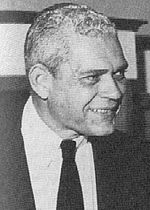
Clay ShawClay L. Shaw is widely known, thanks to Oliver Stone, as someone who was complicit in the assassination of President Kennedy. In Stone’s movie, JFK, Shaw was played, by renowned actor Tommy Lee Jones, as an effeminate, fastidious, limp-wristed gay man who enjoyed homosexual orgies while watching films of the Hitler Youth engaged in exercise, as well as one of the architects of the 1963 JFK assassination.

Yet, the real Clay Shaw was nothing like the man portrayed in Stone’s film. Far from enjoying anything about NAZIs, the real Clay Shaw was a progressive liberal who supported President Kennedy’s election as well as a World War II veteran who fought against Nazism in Europe and who was decorated by three different countries: The United States with the Legion of Merit and Bronze Star, by France with the Croix de Guerre and named Chevalier de l’Ordre du Merite, and by Belgium named Chevalier of the Order of the Crown of Belgium.

Shaw was a man’s man with an athletic and powerful build. While no credible evidence was presented of Mr. Shaw’s alleged homosexuality – he repeatedly denied being gay – one could hardly fault a prominent businessman, in 1960’s Louisiana, for not acknowledging it – were he, in fact, a gay man.. In the end, Mr. Shaw’s sexual orientation is not germane to the underlying issues concerning the miscarriage of justice visited upon him by New Orleans DA Garrison.

Clay Shaw was the only person ever tried for the assassination of President John F. Kennedy. Most, however, do not know that he was also a highly decorated war hero, a prominent New Orleans businessman, a French Quarter preservationists, a valued civic leader and, from the age of sixteen, a successful playwright. Some of his plays are still produced to this day.

Born on March 17, 1913 into a respected family in the small Louisiana town of Kentwood, Clay Laverne Shaw was named for his grandfather, Thomas Clay Shaw, Kentwood’s Town Marshal. When he was five, he and his family moved to New Orleans.

At Warren Easton High School, Shaw’s one-act play “Submerged,” which he wrote with a classmate, won a state playwriting contest. After graduation from high school, Shaw moved to New York where he managed a Western Union office, while attending Columbia University. Later, he worked as a booking manager for a prominent lecture bureau, representing luminaries such as poet John Masefield, actor Maurice Evans, and first lady Eleanor Roosevelt. Mr. Shaw, a life-long progressive and enthusiastic supporter of “The New Deal,” was particularly fond of Mrs. Roosevelt and her late husband, President Franklin Roosevelt.
When World War II began, Shaw enlisted as a private in the U.S. Army Medical Corps. Soon there after he would be commissioned as a 2nd Lieutenant. Recognizing his keen intelligence and remarkable talent for organization, Shaw was appointed to the staff of Brigadier General Charles O. Thrasher, directing supplies for the million men who crossed the English Channel in the D-Day invasion.

In the post war world, Shaw saw international trade as more than just a matter of economics. He told a local newspaper, “People who are doing business with each other don’t often get into a fight. Nobody shoots a good customer, and countries that have friendly relations aren’t going to start a war.” While serving as Managing Director of the International Trade Mart in New Orleans, Shaw also became an urban preservationists, renovating French Quarter buildings.

All of these activities left little time for his first love, writing. In 1965, Shaw decided to retire from his position as the Director of the New Orleans International Trade Mart after having built the Organization into our country’s commercial pipeline to Latin America. At his retirement, the City of New Orleans awarded him its highest honor, the International Order of Merit, in appreciation of his many contributions to the city. But, the social and political turbulence of the 1960s made a quiet retirement for the aspiring writer impossible.

President John F. Kennedy was assassinated in Dallas nearly three years prior to Clay Shaw’s retirement. President Lyndon B. Johnson appointed a blue-ribbon committee to investigate the assassination and to report its findings to the American people. Headed by Supreme Court Chief Justice Earl Warren, it became known as the “Warren Commission.” The Commission concluded that Lee Harvey Oswald was the lone assassin, but a vocal portion of the population felt that they had not presented the whole story.

New Orleans District Attorney Jim Garrison was one such skeptic. Garrison was Liberal, ruthless, and politically ambitious. He saw in the Kennedy assassination his opportunity for fame. He announced that the Warren Commission had deliberately lied to the American people, purposefully covering up a conspiracy. Reveling in the international attention he received, Garrison proposed, variously, that the conspiracy was hatched by the C. I. A., the F. B. I., the military-industrial complex, Cuban Communists, and Lyndon Johnson with the help of his Texas oil baron friends.

But Garrison needed a theory that allowed him jurisdiction to prosecute, so he came up with the idea that the conspiracy was planned in New Orleans, and the assassination was a “homosexual thrill killing.” He told a journalist, “They had the same motive as Loeb and Leopold when they murdered Bobbie Franks in Chicago.”

On March 1, 1967, Jim Garrison arrested Clay Shaw and charged him with conspiring to assassinate President Kennedy. Garrison suspected Shaw was gay, but the general public did not. Shaw would soon forever be known to the world, rightly or wrongly, as a “homosexual.”

A pillar of the New Orleans’s Community, Shaw was soon being falsely described by Garrison and his office a as a sadistic and perverse man who patronized gay prostitutes. Many of New Orleans’s civic leaders protested the false charges as nothing more than a witch hunt.

While the prosecutor had an entire staff and large budget devoted to the prosecution, Mr. Shaw was force to spend most of his life’s savings in defending against the charges.

At trial, it soon became evident that Mr. Garrison really had no case despite having assured the swarm of media organizations covering the affair that he had more than sufficient evidence to convict Mr. Shaw.
Prior to trial, national news outlets, including NBC, The New York times and the Washington Post, began covering stories concerning documented instances of misconduct by District Attorney Garrison’s office. These included, among others, bribery, intimidation and suborning perjury in an effort to coerce people into testifying against Clay Shaw.
Some of the reporting included taped and televised interviews with witnesses Garrison’s office attempted to extort into giving false testimony against Shaw.

EXAMPLE ONE:

INTERVIEW OF JOHN CANCLER BY NBC NEWS

Q. What is your profession, Mr. Cancler?
A. You mean, what was my profession?
Q. Yes.
A. I was a burglar.
Q. You were in Parish Prison on this burglary rap.
A. Right.
Q. And did you meet a man named Vernon Bundy there?
A. I found out later his name was Vernon Bundy. See, I didn’t know what his name was until I read the paper. I only knew him as “Legs.”
Q. What did “Legs” tell you up there?
A. He just said, “I wonder whether I should say I saw him on Esplanade or I saw him on the lakefront.” I said, “Man, it’s getting bad if you start talking to yourself, too.” You know, like some of these guys will stir bug, you know. He said, “No, man.” He said, “I’m talking about this cat, Shaw.” I said, “What you talking about, man?” He said, “Man, I don’t know whether it’s best for me to say I saw him on Esplanade Street or the lakefront.”
Q. Did Bundy indicate to you whether the story that he was going to tell in court was true?
A. Did he [indicate]? How could he indicate when he would ask me, should he say this or should he say that? If it was the truth, he would know what to say.
Q. It was obvious from what he told you that he was going to tell a lie then?
A. He told a lie.
Q. Did he tell you it was a lie?
A. Sure. I asked him, “Man, is this the truth?” He said, no. He said, “No, it’s not the truth.”(2)

EXAMPLE TWO:

INTERVIEW WITH MIGUEL TORRES BY NBC NEWS

Torres was also incarcerated with Garrision’s important witness, Vernon Bundy.

Q. What did he [Garrision witness Vernon Bundy] tell you about his testimony that day?
A. He says, “Well, that’s the only way that I can get cut loose.” I asked him, how much time did he owe that state. He said he owed the state five years; he was out on five years’ probation. And then I said, “Well, that’s a hell of a thing to be doing in order to do what you want to do.” He says, “Well, the reason I am doing this is, it’s the only way I can get cut loose.”
Q. In other words, he said to you, in effect, that he was testifying as he was in the Shaw hearing in order to prevent his probation from being revoked, is that right?
A. From being violated, yes, sir.
Q. Did you get the impression that he knew that his testimony in the hearing had been false?
A. Well, just exactly how I said. He said, “The reason I am doing this is because it’s the only way I can get cut loose.” And the impression I got was that: that it was [an] out-front lie.(3)

EXAMPLE THREE

INTERVIEW WITH MIGUEL TORRES BY NBC NEWS

A. A few months back they called me out to the control center at Angola, and there was two district attorney investigators who came to me with some pictures in a briefcase.
Q. Who were they?
A. One of them was Lynn Loisel, and I forgot the other one’s name.
Q. Louis Ivon?
A. Yes, sir, I believe that’s the name. Well, Mr. Loisel, the way he opened up the conversation, he asked me what was the thing that I wanted the most. I told him, needless to say, my freedom. So he said, I could either be cut loose right away, or I could be made to serve this whole nine-year sentence. The way he said it, the District Attorney, Mr. Garrison, could cut me loose completely. He would say he was a very powerful man, that he could hurt many people, or he could also help them. All depend [sic] on how they cooperated with him.
Q. Now, what happened to you after you came back here to the Parish Prison?
A. Well, he started asking me — You see, I lived in the 1300 block of Chartres, way back when I first came to the states. And then I lived in [the] 900 block of Esplanade, which puts me in a good position around Mr. Clay’s house. And he wanted me to say I had been approached by Mr. Shaw in couple occasions [sic], see. And I refused to say that. I told him, I can’t say that.
Q. Approached in what way?
A. Homosexual approach. And he wanted me to say that Mr. Clay Shaw was Clem Bertrand.
Q. Had you ever been approached by anyone meeting that description?
A. No, sir. I have never been approached by anyone like that.

As one might suspect, Mr. Shaw was acquitted at trial where his bewildered jurors, who deliberated less than an hour before rendering a verdict, expressed shock that such a case was even brought to begin with.
Mr. Shaw, who had planned on an early retirement around the time he was charged, ended up having to return to work in order to support himself. He died some five years later as a recluse. The anxiety and extreme pressure he endured as a result of this persecution by Garrison’s office, as well as the smearing of his name throughout the international press, had taken a severe toll on the former war hero’s health. He would never recover – emotionally or physically.

As for Mr. Garrison, the voters drove him from office by an overwhelming majority when he attempted reelection. This, in large part due to the bogus case brought against Mr. Shaw.
Unfortunately for Mr. Shaw, it is impossible to unerring a bell and he spent the remainder of his life tarnished by the event.

America’s Greatest General

Relatively small in numbers are those of us who remember one of our nation’s greatest military heroes, former Air Force Chief of Staff, General Curtis LeMay.   Yet, only a generation ago, his outsized personality and larger than life portfolio of accomplishments made him a beloved and trusted figure to most Americans.  No more a telling testament to his character and leadership abilities were there ever than the near universal love of and devotion to LeMay displayed by those who were fortunate enough to have served under him.  Yet, today, one need only “Google” General LeMay’s name to witness the endless pages of virulent attacks against his character  and achievements where he is accused of everything from taking part in the assassination of President Kennedy to being a racist war monger, frothing over at the mouth to incinerate  all of humanity in a Nuclear inferno.

 General LeMay beckons our collective memory back to a time when America’s Military leaders were warriors and forceful guardians of our national security who suffered fools poorly and had little patience for those civilian officials who would try to compromise our national defense in the name of political horse trading or expedience. LeMay and his contemporaries during those crucial and uncertain years of the Cold War stand in stark contrast to some of today’s meek mannered, politically correct Generals who seem more interested in future admission into the Council on Foreign Relations than risking controversy by aggressively standing up for our national security. Could anyone honestly say that if Generals like Curtis LeMay, Lyman Lemnitzer, George Patton, or Thomas Power were giving a free hand at running the War on Global Terrorism we would be losing or at least void of any measurable results?

 Curtis LeMay was born and raised in Ohio, one of ten children, under extreme poverty.  Hunger was the daily norm for him and his nine siblings. Overcoming many obstacles, he went on to work his way through Ohio State University graduating with a degree in civil engineering. A stellar member of the university’s R.O.T.C. program, LeMay went on to a career in the then fledgling U.S. Army Air Corps in 1930.

 Young Lieutenant LeMay proved a natural, both as a stellar pilot and as a student of aerial navigation.  At a time when the Air Corps was considered an overpriced novelty by America’s military leaders, LeMay recognized the overwhelming potential of aircraft as the seminal force in future wars.  As navigator on a B-17 bomber, he located an American battleship in exercises off the coast of California, after which LeMay’s aircraft successfully attacked it with water bombs, despite being given the wrong coordinates by Navy personnel. In May 1938 he navigated a group of B-17 Bombers over 610 miles across the Atlantic Ocean to intercept the Italian liner Rex thus illustrating the ability of U.S. airpower to defend the nation’s coasts.

 Upon the entry of the United States into World War II, LeMay was rapidly advanced in rank. Initially commanding the 305th Bomber Group, LeMay became instrumental in developing U.S. tactics and strategy in the European Air campaigns. He is credited with inventing the “Box Formation” for B-17 Bombers.  Bombing missions at the time were the most dangerous in the war.  Over half of the B-17 air crews would be lost during the early years of the war. Although not expected of bomber wing commanders, LeMay would often personally lead his formations during bombing operations taking the position of lead aircraft which was far and away the most dangerous position to fly in the formation. Typical of these missions was the attack on the Regensburg section of the Schweinfurt-Regensburg area of Germany during August of 1943. In that mission LeMay personal  led a formation of 146 B-17 bombers beyond the range of escorting fighters into Regensburg, Germany, and after bombing, continued on to bases in North Africa, losing 24 bombers in the process.

 At the onset of the Cold War, America found itself in the position of needing a credible nuclear deterrent. The Triad doctrine consisting of a strategic nuclear deployment configuration of bomber, submarine   and missile (ICBM) based delivery platforms was the virtual creation of General LeMay.  LeMay also conceived and oversaw development of what would become the Strategic Air Command (SAC).  The institutions, doctrines and policies proved an insurmountable defense to any adversary hoping to achieve a nuclear knockout blow via a surprise attack on U.S. strategic assets.  Perhaps more importantly, this brainchild of General LeMay prevented any subsequent wars of the scale of WWI and WWII.  Such large scale conventional conflicts between world powers became far too risky in the LeMay nuclear age.  Curtis LeMay was the father of the Peace through Strength school of thought and indeed, coined the “Peace is Our Profession” mission statement frequently displayed on SAC bases throughout the Cold War.

 Yet, despite the years of service to his country and immeasurable contributions to our national security, which were realized for decades after his retirement from active service, his vilification became a cause célèbre for the radical left in America.  While beloved by the vast majority of Americans for his role as the preeminent defender of our national security, it was these same traits that caused him to be despised by the American hating left of the era.  He was often portrayed by American radicals as a warmonger, frothing at the mouth to initiate a global holocaust.  Very odd when one considers that it was LeMay alone, during his time commanding SAC, who had at his disposable the launch codes and orders needed to launch a nuclear strike independent from an order given by the U.S. President. This, so as to ensure that any surprise attack against the national command structure in Washington, would not leave the country unable to launch a coordinated counter-attack.

 For most of us who remember him, his true legacy will always be secure.


Evan Mecham: Ruined by Liberal McCarthyism but Jump-Started the Movement that Ushered in Donald Trump and Trumpism

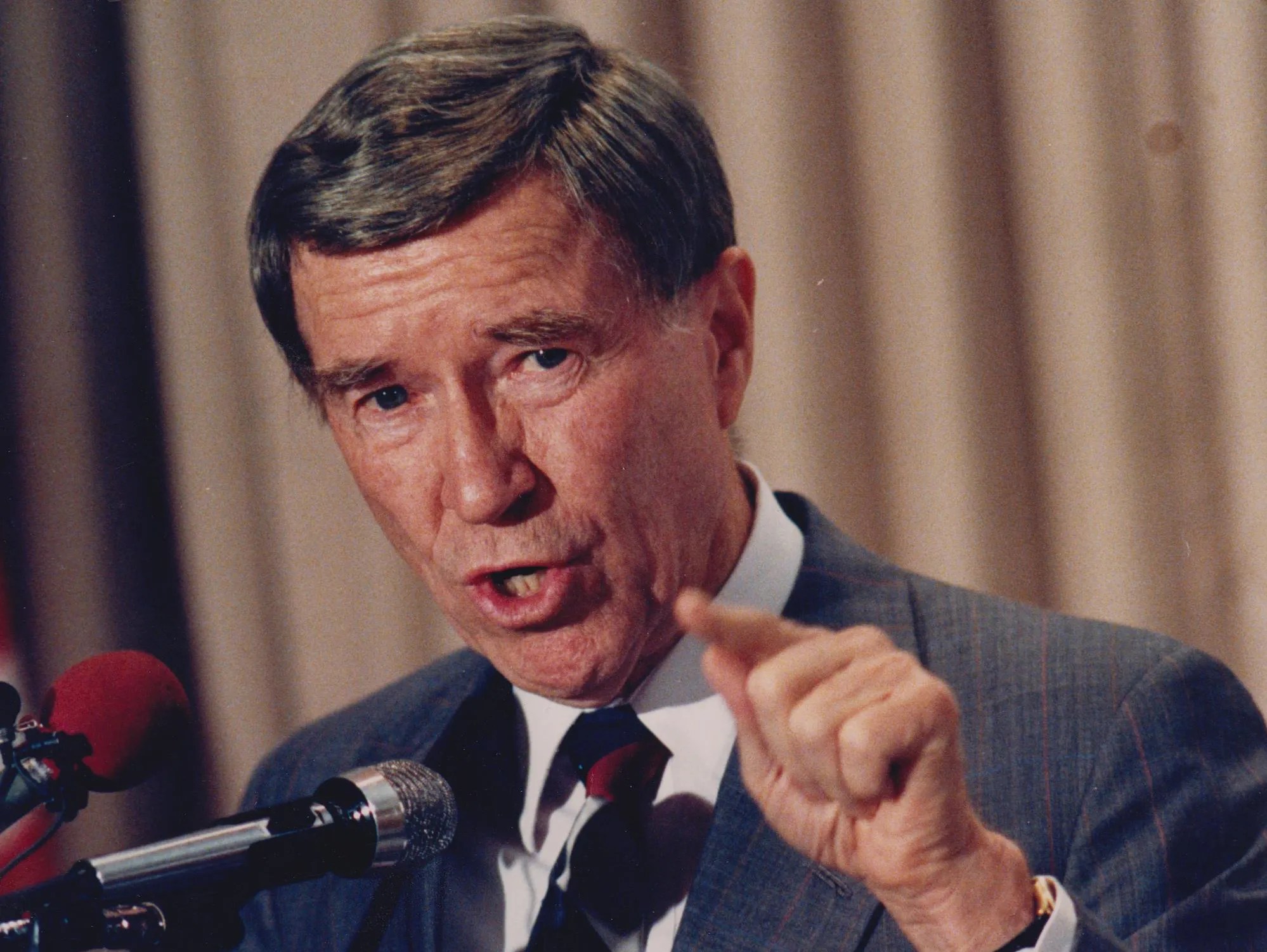
Evan Mecham (May 12, 1924 – February 21, 2008) was our nation’s first truly Populist Conservative Governor in the vein of President Donald Trump. What Governor Mecham started politically was a Populist Conservative movement which was the forerunner of today’s “Trumpism.” Mecham was one in a not so long line of trail blazing politicians who laid the foundation for Donald Trump and what today is known as “Trumpism.” Thanks to the brave and selfless men like Evan Mecham, future Republican Presidential Candidates will be judged by GOP voters in caucuses and primaries by how their beliefs hold up to the ideology of men like Trump and Governor Evan Mecham. Like Trump, he was targeted for impeachment and criminal prosecution by the elites even before he was officially sworn in as Governor. 

Evan Mecham was a decorated hero of the Second World War, who grew up in poverty yet nevertheless went on to become a self-made millionaire businessman and he did this all without the help of a single social worker or a government grant. How did he do it? Known as a “cracker jack” pilot during the war, Mecham flew the famous P-51 Mustang fighter in numerous combat missions over Western Europe. He was also one of the first fighter pilots in history to engage in aerial combat or “dogfight,” with a jet aircraft.

On March 7, 1945, while flying on a fighter escort mission over Germany, Mecham encountered a Messerschmitt (Me) 262 – German jet aircraft. In order to protect the lives of American Airmen flying in a photo reconnaissance plane, Mecham courageously attacked the German fighter Jet in his prop driven P-51. Lieutenant Mecham engaged the enemy bogey with his six .50 caliber machine guns located on his aircraft’s wings. After a brief yet hard fought battle, which drew the German aircraft away from the photo reconnaissance plane he was charged with protecting, the far faster and more maneuverable German jet was able to position itself in a blind spot under Mecham’s Mustang and opened fire. In an instant, Mecham’s P-51 was transformed into hurling wreckage, spinning violently toward earth. Despite the multiple G-Forces virtually pinning him inside the cockpit, Mecham was able to wrest himself free from his doomed aircraft and deploy his parachute.

Making a hard landing on German soil, the young American Air Corps officer shattered a knee and was thus unable to escape or evade German security forces. He was taken to a prisoner of war camp inside Germany where he remained until the final days of the war in Europe. It was during his time as a POW that Mecham began to understand the true importance of leadership. It was clear to him that it was not soldiers who started wars but rather, political leaders. For his heroism, Mecham was awarded the Air Medal and the Purple Heart. Mecham was discharged from active service and returned home in early 1946 as a legitimate war hero.

He soon married his high school sweetheart and returned to college at Arizona State University. After college, Mecham purchased a Glendale Pontiac dealership primarily with the money he had saved both during and after the war. Mecham proved to have a knack for business and soon he would own several car dealerships in a number of states. A self-made millionaire by the time he was thirty years old, Mecham’s financial empire would eventually include a sizable interest in a mining company as well as other lucrative ventures.

It would have been quite easy for Mr. Mecham to coast through the remainder of his life on the fortune he had made during his early adulthood. Had he done so, he would have undoubtedly been recognized as a self-made man who epitomized the American dream. He would have been remembered as the unassuming war hero turned community booster who taught Sunday school at his church and who supported many charitable works. Perhaps most of all, he would have been remembered as a superb father to his seven children and many grandchildren as well as a stellar husband and patriarch of a very functional family. Yet, Mecham died in 2008 a broken man in financial ruin with his reputation destroyed. Why? Mecham, who sought more than mere financial success, apparently had the unmitigated gall to seek public office in defiance of and opposition to a small cabal of behind-the-scenes power brokers who owned the primary industries and major media outlets in the State of Arizona.

In the late 1950’s Mecham, like many other Arizona businessmen and politicians, was aware of a small group of elites located in the City of Phoenix who virtually controlled the political and economic scene in Arizona, which was then a small, sparsely populated state. Many complained about this group, which later would become known as the “Phoenix 40,” for their iron clad grip on the state through generous financial support and favorable media puff for those politicians whom they handpicked. In return, the Phoenix 40 received a free run of the state including the ability to develop large areas of land and harvest the state’s considerable resources with little or no regulation. Members of the Phoenix 40 also included the state’s most prominent bankers.

At all levels, the relationships were interwoven. The business interests in this elite group supported the group’s media owning members through their advertising dollars. The media members wrote favorable pieces about the group’s business interests as well as those handpicked politicians who were supported by the 40. The Phoenix 40’s politicians passed legislation favorable to their benefactors in the 40 and those same politicians ran interference against bureaucratic meddling in the 40’s business activities. For the Phoenix 40, the arrangement was tantamount to a government mandate to print their own money. To unscrupulous politicians, it was a one-of-a-kind blessing: near unlimited money and glowing press coverage in furtherance of their electoral ambitions. Those who dared to oppose the Phoenix 40 were destroyed.

Even Mecham believed as did many others, that the influence if not outright control of the state by such a small group was wrong and posed a danger to the democratic process. In 1960 Mecham was elected to the Arizona State Senate and started an independent newspaper. A fighter from the beginning, Mecham took on the powerful special interest that had turned Arizona into their own general store. For his efforts, he was lambasted by the Phoenix 40’s media outlets and discredited throughout the state’s power elites.

Despite this organized campaign of character assassination, Evan Mecham was elected Governor, after several unsuccessful attempts in 1986 on a platform of returning control of the state to the people. The newly elected governor went after the Phoenix 40 and their supporters with all the vigor and leverage his new office could muster.

They day after his election, the powerful behind the scenes elite and Phoenix 40 controlled media went after the newly elected Governor with a vengeance and a recall campaign was started against Mecham before he was even sworn in. Just as the liberal establishment attempted to prevent Donald Trump from being sworn in after winning the 2016 Presidential election. For his part Mecham, who was not a seasoned politician, spoke from his heart and committed a number of gaffes that were further magnified and distorted by a hostile media. He was also often misquoted by the press.

After only a couple of months into his term, Mecham was being investigated by the 40’s State Attorney General on some alleged and completely manufactured charges of financial misconduct. He was later charged with three different criminal offenses that were so outrageously fabricated, they are not even worthy of further description other than to note he was easily acquitted in a court of law of all charges which came as no surprise to those in the legal community.  Although ultimately being exonerated by the trial court of all wrongdoing, Mecham found himself fighting a recall campaigned handsomely funded by the deep pockets of the 40 as well as impeachment proceedings prosecuted by Phoenix 40 politicians which were the exact same charges that he would be easily acquitted of in his criminal trial. The jury members interviewed after the Mecham’s criminal trial made it entirely clear that none of the spurious charges against Mecham has any merit at all. But rather than let the Arizona voters and the courts have their say, the legislature removed him from office. This as all credible polling showed that Mecham would have easily won a recall election and so the liberal democrats and the Phoenix 40 Republicans decided to remove Mecham via impeachment They destroyed Mecham politically and finically as Governor Mecham themselves rather than trust the judgement of the voters. Several former Arizona State Senators have come forward over the years to acknowledge that their actions were in impeaching Mecham were wrong.  

The wealthy young man who financed the Mecham recall petition and other anti-Mecham activities was none other than future notorious gay criminal and prolific drug user Edward Buck. Buck a young Gay, Liberal activist in 1986, funded the Mecham recall effort with his own fortune. He went on to become a mega donor to liberal Democratic causes and candidates after moving to California. Buck had a penchant for luring young black men to his home where he would inject them with crystal methamphetamine then rape and sometimes torture these men in their unconscious or semi-conscious state for his own perverse sexual gratification. Two of these unfortunate men died. Buck is currently in prison and will likely be released around the same time JFK returns from the dead and strolls down Hollywood Boulevard, naked with all 31 of his former mistresses in tow.  Why are so many Democratic mega donors such profound creeps? Was Buck engaging in these perverse predatory activities in Arizona? We’ll never know.  

Mecham was the only Governor in U.S. history to be attacked on so many fronts. After nearly forty years, compelling evidence now shows that his 1988 impeachment was orchestrated by a powerful behind-the-scenes group lead by the Phoenix 40 and was based on purely political motives. Threatened by Mecham’s pledge to take political power out of the hands of special interests and return to government on behalf of the people, the powerbrokers hatched an ingenious plot to get rid of him. Fifteen months into his four-year term, despite the fact that Mecham had not broken a single civil or criminal law, they succeeded.

Mecham died in 2008 in a veteran’s home in a pronounced state of failed health undoubtedly brought on by the overwhelming stress and anxiety of fighting the character assassination visited upon him. Most of his fortune had dissipated fighting the various make-believe charges brought against him and in defending his reputation.

The character assassination of Governor Mecham demonstrates what many today in America now realize: that the intricate processes of government can and is often easily manipulated by the elites. Thus, the moral to the Mecham story is that a handful of elites and special interests can veto the decisions of the voting public. Does this sound familiar?

So, the real question is this: Why was the establishment able to so effectively neutralize Mecham and his movement but not that of Donald Trump and Trumpism? The answer primarily has to do with the media. in 1986, a majority of voters were willing to accept the assertions of the media in its political coverage at face value. However, alternative media in the form of talk radio and the internet has had the effect of democratizing the flow of information. The voter of todays has more access to information about candidates than any time before. 

Evan Mecham was despised by the Republican establishment. Thanks to Mecham, Pat Buchannon and the other trailblazers of Populist Conservatism, the GOP of today is the Party of Donald Trump and Evan Mecham. Even years before his death, Mecham realized that the movement he helped start, was gaining steam and would one day be the dominant force in American politics. The elites in our society will always attempt to thwart men like Evan Mecham and Donald Trump because these men and those like them, represent the one thing these elites fear most, which is we the American people.