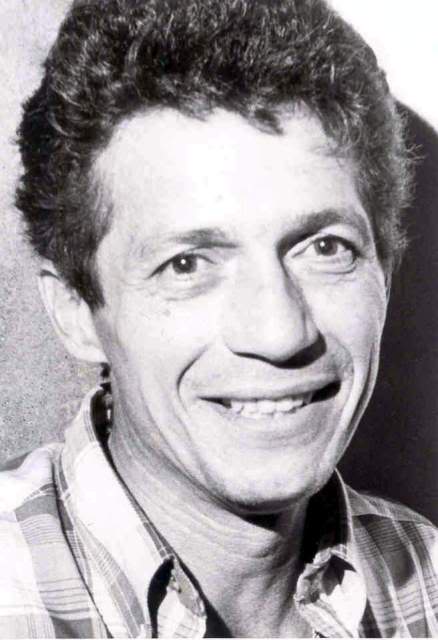
The recent and despicable celebrations by communists in Great Briton and worldwide, over the death of Baroness Thatcher have yet again demonstrated how anyone who has made it their life’s mission to fight Communism, is forever vilified not just by Marxist but, by their progressive ideological cousins in the media, publishing and Hollywood. Think of any person, living or dead, who stood up to Communism and take note of how the internet, as well as popular media, is awash with hateful smears and character assassinations directed at them. No better example of this is demonstrated in the life of the Salvadorian politician Roberto D’Aubuisson.
Roberto D’Aubuisson, a career Salvadorian Army officer and politician, was born in Born in Santa Tecla, La Libertad Department, El Salvador and graduated from the national military academy in 1963. He was trained in communications at the School of the Americas, Fort benning Georgia, in 1972, subsequently joining Salvadoran military intelligence.
As a young officer, D’Aubuisson quickly gained a reputation as a bright and talented leader. Had his military career not been cut short in the 1980s due to his entry into electoral politics, many of his contemporaries believed he might have one day served in the top echelons of the Salvadorian Military.
One of the co-founders of the, Right of Center, ARENA Party, a young D’Aubuisson, as its standard bearer, led his fledgling party to an electoral victory in the 1982 National Assembly elections. The primary reason for the stunning success of the ARENA Party was its steadfast opposition to the Soviet financed and supplied Communist Terrorists which were holding the rural countryside hostage in its “take no prisoners” style of Marxist revolution.
The FMLN, the Marxist revolutionary organization in El Salvador, was notorious for raping women, kidnapping prominent citizens for ransom and assassinating Salvadorian public officials. This, when they weren’t engaging in a campaign of outright terror to intimidate and extort the people of El Salvador. They were as much a criminal organization as a political one. Whenever their troop levels ran low, mostly though desertions, they would simply kidnap young teenage boys from the countryside and press them into service.
FMLN abuses against the civilian population often took place outside of its conflict with the democratically elected government of El Salvador. Some of the people these Communist FMLN guerrillas kidnapped included the Salvadoran foreign minister in 1978 (he was subsequently executed). Beginning in the 1970s and continuing throughout the conflict, the FMLN summarily executed civilians suspected of being government informants. Such individuals were known as orejas, or “ears.”
Targeted killings and disappearances of civilians by the FMLN constituted serious violations of international humanitarian law to say nothing of the laws of El Salvador. Victims included more than eleven mayors, who were executed between 1985 and 1988 in areas the guerrillas considered their “zones of control.” Also killed were four off-duty U.S. Marines, who were machine-gunned at an outdoor café in 1985; and conservative public figures such as Attorney General José Roberto García Alvarado and intellectual Francisco Peccorini, both assassinated in 1989. Other episodes of FMLN abuse included the mass execution of a group of captured civilians in Morazán (1984), the kidnapping of the daughter of President José Napoleón Duarte (1985), and the killing of civilians who refused to stop at guerrilla roadblocks. Scores of civilians were killed and hundreds were wounded by the guerrillas’ indiscriminate use of land mines. On numerous occasions, the use of crude and inaccurate homemade weapons and explosives resulted in innocent civilian deaths.
Many of the family members of these FMLN victims sought revenge. Some of these family members were in the Salvadorian Army although most were not. Hence was born the myth of the so called “Right Wing Death Squads.” In short, a Salvadorian peasant or city dweller who sought spontaneous revenge against their Marxist tormentors for murdering a family member or friend was soon identified with some imaginary and vast Right Wing conspiracy involving the planned and organized murder of FMLN members. In truth, the vast majority of FMLN members were killed on the battlefield by government troops in open conflict. The FMLN barrowed a page from their ideological role model, Vladimir Lenin, who called on his followers to falsely accuse opponents of his revolution with engaging in the same murder and humanitarian abuses as they themselves were engaged in. Enter Roberto D’Aubuisson. D’Aubuisson, the face and voice of the Salvadorian people’s opposition to the Communist terrorists was soon labeled with being terrorists himself. Soon, the FLMN was painting D’Aubuisson, with help from their allies in the Western media, as being the head of the alleged “death squads. A devoted family man and devout Catholic, who seldom missed a Sunday Mass, he would soon even be accused of masterminding the death of the Salvadorian Catholic Archbishop as well as the rape and murder of several Catholic Nuns.
There was never objective (non-FMLN) evidence in support of any of the charges against D’Aubuisson but, that didn’t stop leftists in the Western media from repeating and expounding on the baseless charges as though they were an accepted fact. Years later, many in El Salvador have come to the conclusion that the murder of Archbishop Romero and the Catholic Nuns was actually performed by the FLMN for the sole and sinister purpose of blaming these shocking atrocities on the government and D’Aubuisson. They way the communist propaganda machine churned out the stories; one might believe that D’Aubuisson, a mere Army Major, was somehow coordinating the government’s “genocidal” campaign against the FLMN guerrillas. In truth, D’Aubuisson was a mid- level officer in the Salvadorian Army who did not set policy.
Had he not ventured into a successful career in politics, no one would have ever heard of this obscure Major. It was, rather, his success in rallying the Salvadorian people against the Communists which put him in the crosshairs of the FLMN. D’Aubuisson was ultimately the driving force in the eventual defeat of the communists.
Unable to kill him as they had tried to do, unsuccessfully, for years; they instead settled on a prolonged campaign to smear his name and besmirch his honorable character. Does this sound familiar?
Editor’s Note: The iconic photo of the late Major D’Aubuisson (above) was taken by the acclaimed photojournalist Mr. Robert Meacham.

 The Historical Truth Project